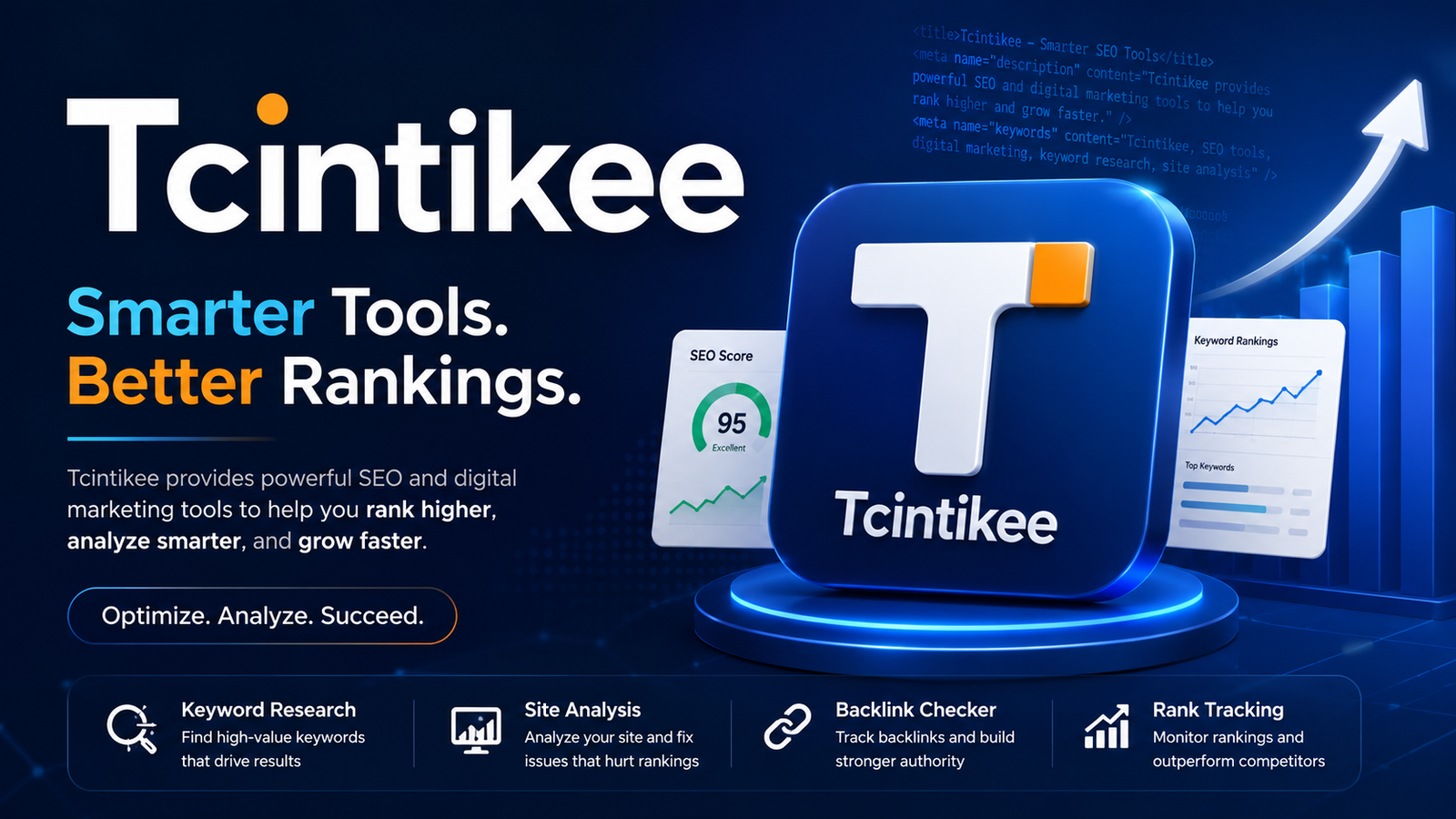
In today’s rapidly evolving digital world, new concepts and terms continue to emerge that shape the way individuals and organisations interact with technology, data, and innovation. One such emerging concept is tcintikee. Although the term may appear unfamiliar at first glance, tcintikee represents a modern digital framework that is increasingly being discussed in professional, technological, and strategic environments. In the context of the United Kingdom, tcintikee is gaining attention as businesses and professionals look for new ways to improve efficiency, enhance digital transformation, and create more adaptive systems.
The importance of tcintikee lies in its flexible interpretation. It can be understood as a conceptual model that connects technology integration, intelligent processing, and knowledge based efficiency within organisations. As industries across the UK continue to embrace digital transformation, tcintikee has started to symbolise the shift towards more connected, data driven, and responsive systems.
Understanding tcintikee requires more than a simple definition. It involves exploring how it functions in different environments, how it supports decision making processes, and how it contributes to long term strategic growth. Whether applied in business operations, education, healthcare, or digital services, tcintikee provides a framework for thinking about how modern systems can work more effectively together.
This article explores tcintikee in depth, offering a comprehensive understanding of its meaning, development, applications, benefits, and future potential. By the end, readers will have a clear insight into how tcintikee fits into the broader digital landscape and why it is becoming increasingly relevant in the United Kingdom.
Understanding What tcintikee Represents in Modern Digital Systems
Tcintikee can be understood as a conceptual approach that focuses on the integration of technology, information, communication, and intelligent operational efficiency. It is not limited to a single tool or software but rather represents a broader philosophy of digital coordination.
At its core, tcintikee emphasises the importance of structured digital interaction. This means systems are designed to communicate more effectively with each other, reducing inefficiencies and improving overall performance. In practical terms, tcintikee can be seen in platforms that combine data analysis, automation, and user interaction into a single cohesive environment.
In the UK, where digital transformation is a key priority across both public and private sectors, tcintikee aligns with the need for streamlined processes. Organisations are increasingly required to manage large volumes of data while maintaining accuracy and speed. Tcintikee provides a conceptual foundation for achieving this balance.
Another important aspect of tcintikee is its adaptability. It is not restricted to a single industry or function. Instead, it can be applied across various domains, including finance, education, logistics, and healthcare. This adaptability makes tcintikee particularly valuable in a diverse and dynamic economy such as the United Kingdom.
Furthermore, tcintikee promotes the idea of intelligent collaboration between systems and users. Rather than relying on isolated tools, it encourages interconnected environments where information flows smoothly and supports better decision making. This interconnectedness is essential in modern digital ecosystems where efficiency and responsiveness are critical.
The Origin and Conceptual Evolution of tcintikee
The concept of tcintikee has evolved as part of the broader development of digital transformation strategies. While the term itself is relatively new and abstract, its underlying principles can be traced back to earlier technological frameworks focused on integration and efficiency.
In the early stages of digital development, systems were often designed to function independently. Over time, however, the limitations of isolated systems became apparent. Organisations began to recognise the need for more integrated solutions that could combine multiple functions into a unified structure. This shift laid the foundation for what is now conceptually understood as tcintikee.
As technology advanced, particularly with the rise of cloud computing, artificial intelligence, and data analytics, the idea of interconnected systems became more practical and widespread. Tcintikee emerged as a way to describe this evolving landscape, where technology is no longer just a tool but part of a larger intelligent ecosystem.
In the United Kingdom, the evolution of tcintikee has been influenced by the strong emphasis on digital innovation across industries. Government initiatives promoting digital infrastructure, combined with private sector investment in technology, have created an environment where concepts like tcintikee can thrive.
Over time, tcintikee has grown from a theoretical idea into a more structured way of thinking about digital systems. It represents the shift from isolated technological solutions to integrated digital environments that prioritise communication, efficiency, and intelligence.
Core Principles That Define tcintikee Systems

Tcintikee is built upon several core principles that guide its application and understanding. These principles help define how it operates within different environments and why it is becoming increasingly relevant in modern digital systems.
One of the main principles of tcintikee is integration. This refers to the ability of different systems and processes to work together seamlessly. Instead of operating in isolation, integrated systems share information and resources to improve overall performance.
Another key principle is efficiency. Tcintikee aims to reduce unnecessary complexity and streamline processes. This allows organisations to achieve more with fewer resources while maintaining high levels of accuracy and reliability.
A further principle is adaptability. In a constantly changing digital environment, systems must be able to adjust to new requirements and challenges. Tcintikee supports this by encouraging flexible structures that can evolve over time.
Intelligence is also a fundamental aspect of tcintikee. This does not only refer to artificial intelligence but also to the broader idea of smart decision making within systems. By using data effectively, tcintikee enables better insights and more informed actions.
Finally, connectivity plays a crucial role. Tcintikee emphasises the importance of communication between systems, users, and processes. This connectivity ensures that information flows smoothly and supports coordinated outcomes.
The Role of tcintikee in UK Digital Transformation
The United Kingdom is widely recognised as a leader in digital innovation, and tcintikee aligns closely with this position. As organisations across the country continue to adopt advanced technologies, tcintikee provides a conceptual framework that supports this transformation.
In business environments, tcintikee helps companies improve operational efficiency by integrating different departments and systems. This leads to better communication, reduced delays, and improved productivity. Businesses in sectors such as finance, retail, and logistics are particularly benefiting from these improvements.
In the public sector, tcintikee contributes to more efficient service delivery. Government agencies are increasingly relying on digital systems to manage data, process applications, and communicate with citizens. Tcintikee supports these efforts by promoting integrated and responsive systems.
Education in the UK is also experiencing the influence of tcintikee. Digital learning platforms, virtual classrooms, and data driven teaching methods all reflect the principles of integration and intelligence that define tcintikee. These systems allow educators to personalise learning experiences and improve student outcomes.
Healthcare is another area where tcintikee is becoming relevant. Integrated patient records, digital diagnostics, and automated scheduling systems all demonstrate how tcintikee principles can improve efficiency and patient care.
Benefits of tcintikee for Organisations and Individuals
Tcintikee offers a wide range of benefits that make it valuable for both organisations and individuals. One of the most significant benefits is improved efficiency. By integrating systems and reducing duplication, tcintikee helps organisations save time and resources.
Another important benefit is better decision making. With access to integrated and accurate data, organisations can make more informed choices that lead to improved outcomes. This is particularly important in fast paced industries where timely decisions are critical.
Tcintikee also enhances communication. By connecting different systems and processes, it ensures that information is shared effectively across teams and departments. This reduces misunderstandings and improves collaboration.
Scalability is another key advantage. Tcintikee allows systems to grow and adapt as organisational needs change. This makes it suitable for both small businesses and large enterprises.
For individuals, tcintikee can lead to improved user experiences. Whether interacting with digital services, educational platforms, or workplace tools, users benefit from more intuitive and responsive systems.
Challenges and Considerations in Implementing tcintikee
Despite its many benefits, implementing tcintikee is not without challenges. One of the main challenges is complexity. Integrating multiple systems requires careful planning and coordination, which can be difficult for organisations with limited resources.
Another challenge is cost. Developing and maintaining integrated systems can require significant investment, particularly in the early stages of implementation. This can be a barrier for smaller organisations.
Data security is also a critical consideration. As systems become more connected, the risk of data breaches or cyber threats increases. Organisations must ensure that robust security measures are in place to protect sensitive information.
Additionally, there is a need for skilled professionals who understand how to design and manage tcintikee based systems. The demand for such expertise can sometimes exceed supply, creating challenges in implementation.
Finally, organisational resistance to change can also slow down adoption. Employees may need time and training to adapt to new systems and processes.
The Future Potential of tcintikee in the United Kingdom
The future of tcintikee in the United Kingdom looks promising as digital transformation continues to accelerate. As technologies such as artificial intelligence, machine learning, and advanced analytics become more widespread, tcintikee is likely to evolve further.
In the coming years, tcintikee may play an even greater role in shaping smart cities, automated services, and intelligent infrastructure. The integration of digital systems across urban environments could significantly improve efficiency and quality of life.
Businesses are also expected to continue adopting tcintikee inspired systems to remain competitive. As global markets become increasingly digital, the ability to integrate and adapt will be essential.
Education and healthcare will likely see continued innovation driven by tcintikee principles. Personalised learning and predictive healthcare are just some of the areas where future developments may occur.
Overall, tcintikee is expected to become an increasingly important part of the digital landscape in the United Kingdom, influencing how systems are designed and how organisations operate.
How tcintikee is Transforming Business Operations
In modern business environments, tcintikee is playing a significant role in transforming how organisations operate. By enabling greater integration between departments, it allows businesses to function more efficiently and respond more quickly to market changes.
One of the key transformations is the shift towards data driven decision making. Businesses are now able to collect and analyse large amounts of information in real time, allowing for more accurate forecasting and planning.
Tcintikee also supports automation of routine tasks, freeing up employees to focus on more strategic activities. This not only improves productivity but also enhances job satisfaction.
Customer experience is another area of transformation. Businesses that adopt tcintikee principles are able to provide more personalised and responsive services, leading to higher levels of customer satisfaction and loyalty.
Conclusion on the Significance of tcintikee
Tcintikee represents a modern approach to understanding and implementing digital systems in a connected and intelligent way. Although the term itself is new and evolving, its principles reflect long standing goals in technology and innovation.
In the United Kingdom, tcintikee is becoming increasingly relevant as organisations continue to embrace digital transformation. Its emphasis on integration, efficiency, adaptability, intelligence, and connectivity makes it a valuable framework for the future.
As industries continue to evolve, tcintikee is likely to play a central role in shaping how systems are designed and how organisations operate. Its potential to improve efficiency, enhance communication, and support innovation ensures that it will remain an important concept in the years ahead.
Ultimately, understanding tcintikee provides valuable insight into the direction of modern digital development and highlights the importance of creating systems that are not only technologically advanced but also deeply interconnected and intelligently designed.
You may also read: Residential Character and Housing Environment in dn06lnh