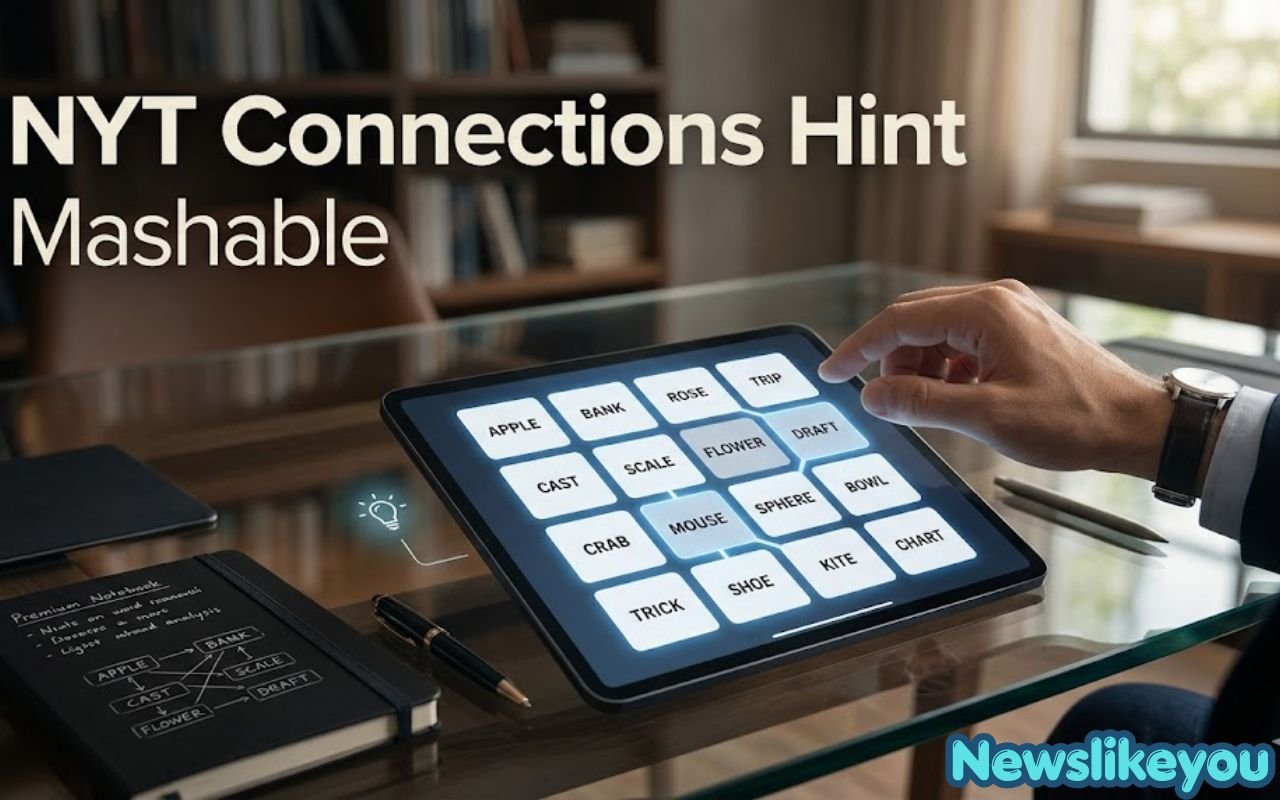
The popularity of online word puzzles has grown dramatically in recent years, and few games have captured public attention quite like NYT Connections. Developed by The New York Times, this engaging word association puzzle challenges players to identify hidden relationships between groups of words. As the game continues to attract millions of daily players, many users search for helpful clues and guidance when they become stuck. One of the most commonly searched phrases in this space is “nyt connections hint mashable”.
The term has become increasingly popular because players often look for daily hints without wanting to see the complete solution immediately. Many puzzle enthusiasts prefer receiving subtle guidance that helps them continue solving independently rather than simply revealing the answer. This approach maintains the enjoyment and challenge that make NYT Connections so appealing.
In this comprehensive guide, we will explore what NYT Connections is, why players seek hints, how Mashable became associated with daily puzzle assistance, the benefits of using hints effectively, strategies for solving puzzles independently, common mistakes players make, and ways to improve your puzzle-solving skills over time.
Whether you are a newcomer to the game or an experienced player aiming to improve your success rate, this article will provide valuable insights into the world of NYT Connections and the growing popularity of searching for NYT Connections hints through Mashable-related content.
What Is NYT Connections?
NYT Connections is a daily word puzzle that presents players with sixteen words arranged in a grid. The objective is to identify four groups of four words that share a common connection.
At first glance, the words may appear unrelated. However, hidden patterns link them together. These connections can range from straightforward categories to more abstract associations. Some groups might involve colours, professions, sports teams, famous names, musical terms, or phrases that share a common word.
The challenge lies in identifying the correct relationships while avoiding misleading patterns deliberately included by the puzzle creators. Many words can seem to fit multiple categories, making the puzzle both rewarding and intellectually stimulating.
Unlike traditional crossword puzzles, Connections focuses on pattern recognition, lateral thinking, vocabulary knowledge, and cultural awareness. These elements combine to create a unique puzzle experience that appeals to a broad audience.
Why NYT Connections Has Become So Popular
The rapid growth of NYT Connections can be attributed to several factors.
First, the puzzle is easy to understand. New players can grasp the rules within minutes. However, mastering the game requires skill, making it accessible yet challenging.
Second, the daily format encourages consistent engagement. Players return each day to tackle a fresh puzzle, creating a routine similar to other successful word games.
Third, the puzzle offers a social element. Many players discuss solutions with friends, family members, and online communities. Sharing successes and debating tricky categories has become part of the experience.
Another reason for its popularity is the balance between difficulty and satisfaction. Successfully identifying a difficult category provides a strong sense of accomplishment, motivating players to continue playing.
As a result, searches related to puzzle help and guidance have increased significantly, leading many users to seek daily hints online.
Understanding the Search Term NYT Connections Hint Mashable
The phrase “nyt connections hint mashable” reflects a common behaviour among puzzle players.
Many individuals enjoy solving puzzles independently but occasionally need assistance. Instead of searching directly for answers, they look for hints that provide gentle guidance.
Mashable has become associated with daily puzzle coverage because it regularly publishes content that helps players navigate challenging Connections puzzles. These articles often provide structured assistance, starting with broad clues before progressing towards more detailed guidance.
The appeal of this format is obvious. Players can choose how much help they want. Someone needing only a slight nudge can stop after reading the initial hints, while others can continue until they find the support they need.
This layered approach aligns perfectly with the mindset of puzzle enthusiasts who want assistance without completely spoiling the challenge.
The Difference Between Hints and Answers
One important aspect of puzzle-solving is understanding the distinction between hints and answers.
Answers immediately reveal the solution. While this may help someone complete the puzzle, it removes the intellectual challenge.
Hints, on the other hand, preserve engagement. They encourage players to think critically while providing enough direction to overcome obstacles.
For example, a hint may suggest that a category relates to animals, films, or sports without identifying the specific words involved. This guidance narrows possibilities while still requiring active problem-solving.
Many experienced players strongly prefer hints because they maintain the educational and entertaining value of the game.
The popularity of searches involving NYT Connections hints demonstrates a widespread preference for guided discovery rather than instant solutions.
How Puzzle Hints Improve Learning
Using hints strategically can actually improve puzzle-solving ability over time.
When players receive carefully designed clues, they learn to recognise patterns more effectively. Instead of simply memorising answers, they develop analytical skills that transfer to future puzzles.
Hints encourage observation and critical thinking. They prompt players to examine words from different perspectives and consider less obvious relationships.
Over time, repeated exposure to this process strengthens cognitive flexibility. Players become more adept at spotting hidden connections and avoiding misleading associations.
This educational benefit explains why many puzzle enthusiasts actively seek hint-based guidance rather than direct answers.
The Psychology Behind Puzzle Solving
Human beings naturally enjoy solving problems. Puzzle games tap into several psychological mechanisms that make them deeply satisfying.
One key factor is the reward system in the brain. Successfully identifying a connection triggers feelings of achievement and satisfaction.
Another factor is curiosity. The desire to uncover hidden patterns motivates continued engagement even when a puzzle becomes difficult.
Puzzles also provide a sense of progress. Each correctly identified category brings players closer to completion, creating momentum and encouraging persistence.
The strategic use of hints enhances these psychological rewards by preventing frustration while preserving the challenge.
Instead of abandoning a difficult puzzle, players can receive enough assistance to continue progressing and ultimately experience the satisfaction of solving it themselves.
Common Categories Found in NYT Connections
Understanding common category types can significantly improve performance.
Many categories involve synonyms. Words may share similar meanings or belong to the same conceptual group.
Other categories focus on professions, hobbies, geographical locations, entertainment, science, literature, or history.
Some puzzles include wordplay categories. These often require players to think beyond literal meanings and consider alternative interpretations.
Pop culture references also appear frequently. Knowledge of films, television programmes, music, and famous personalities can be helpful.
Certain categories involve phrases or compound expressions where words commonly appear together in everyday language.
Recognising these recurring themes can make future puzzles easier to solve.
Why Some Connections Are So Difficult
Players often wonder why certain categories seem exceptionally challenging.
The answer lies in deliberate puzzle design.
Creators frequently include words that appear to belong together but actually belong to separate categories. These misleading relationships are known as red herrings.
For example, four words might appear related to sports, but one of them could secretly belong to a completely different category.
This design technique increases difficulty and forces players to think more carefully.
Additionally, some categories rely on specialised knowledge or cultural references. Players unfamiliar with a particular subject may struggle to identify the intended connection.
The most difficult categories often involve abstract relationships that require creative thinking rather than straightforward categorisation.
Effective Strategies for Solving NYT Connections
Developing a systematic approach can dramatically improve success rates.
Begin by scanning all sixteen words without making immediate assumptions. Look for obvious categories but remain open to alternative possibilities.
Identify words with strong associations first. These often provide clues that lead to additional discoveries.
Avoid committing too quickly to a category. If a group seems plausible but uncertain, continue exploring other possibilities before submitting it.
Pay attention to words that could fit multiple categories. These terms frequently serve as key obstacles in the puzzle.
Taking short breaks can also be beneficial. Returning with fresh eyes often reveals patterns that were previously overlooked.
Most importantly, remain patient. Many successful solvers spend time considering various interpretations before reaching the correct solution.
The Role of Pattern Recognition
Pattern recognition is perhaps the most important skill in NYT Connections.
The game rewards the ability to identify relationships that are not immediately obvious.
Strong pattern recognition develops through experience. The more puzzles players complete, the better they become at spotting recurring themes and structures.
This skill extends beyond puzzle-solving. Pattern recognition plays a crucial role in decision-making, learning, problem-solving, and analytical thinking.
Regular engagement with word puzzles can therefore provide broader cognitive benefits.
The search for NYT Connections hints often represents an effort to strengthen these pattern-recognition abilities rather than simply obtain answers.
How Daily Practice Improves Performance
Consistency is a major factor in puzzle mastery.
Players who complete puzzles regularly tend to improve significantly over time. Daily exposure introduces them to a wider range of categories, references, and word associations.
This accumulated experience builds intuition. Experienced players often recognise potential categories much faster than beginners.
Regular practice also increases vocabulary and general knowledge, both of which contribute to puzzle-solving success.
Even spending a few minutes each day on Connections can produce noticeable improvements over several months.
The process resembles learning a language or developing any other cognitive skill. Progress occurs gradually through repeated exposure and active engagement.
The Community Aspect of NYT Connections
One reason for the game’s success is its vibrant community.
Players frequently discuss puzzles online, compare solving strategies, and share insights about difficult categories.
These discussions create a sense of connection among enthusiasts. People enjoy analysing particularly clever puzzles and debating alternative interpretations.
The community aspect also encourages learning. Exposure to different perspectives can help players recognise patterns they might otherwise miss.
Many users who search for NYT Connections hints are participating in a broader culture of collaborative puzzle solving rather than simply seeking assistance.
Balancing Challenge and Assistance
Finding the right balance between challenge and assistance is essential.
Too little help can lead to frustration. Too much help can diminish satisfaction.
Hints occupy the ideal middle ground. They provide support while preserving the puzzle-solving experience.
Many successful puzzle enthusiasts follow a gradual approach. They attempt the puzzle independently first, seek minimal hints if necessary, and consult full solutions only as a last resort.
This strategy maximises both enjoyment and learning.
The popularity of hint-focused searches reflects a growing appreciation for this balanced approach.
Mistakes Players Commonly Make
Several recurring mistakes can hinder progress.
One common error is focusing too heavily on the first apparent category. Early assumptions can create tunnel vision and prevent players from recognising alternative relationships.
Another mistake involves ignoring less obvious interpretations. Words often possess multiple meanings, and successful solutions frequently depend on recognising these alternatives.
Some players also rush submissions without thoroughly evaluating their choices. Taking extra time to reconsider categories can prevent unnecessary errors.
Overreliance on external assistance may also slow improvement. While hints can be valuable, developing independent problem-solving skills remains important.
Awareness of these mistakes can help players refine their approach and achieve better results.
The Educational Value of Word Puzzles
Word puzzles offer numerous educational benefits.
They enhance vocabulary by exposing players to new words and meanings.
They strengthen memory through repeated recall of information and associations.
They improve concentration by requiring sustained attention and mental effort.
They encourage flexible thinking by presenting problems that can be approached from multiple angles.
Additionally, they promote lifelong learning by motivating players to explore unfamiliar topics and cultural references.
These benefits help explain why word puzzles continue to attract diverse audiences across different age groups.
Why Puzzle Content Continues to Grow Online
The growing popularity of puzzle games has created substantial demand for related content.
Players seek strategies, explanations, hints, discussions, and analyses that help them improve.
This demand has encouraged the development of dedicated puzzle communities and daily guidance articles.
Search terms such as “nyt connections hint mashable” reflect this broader trend. Users want reliable assistance that enhances rather than replaces the puzzle-solving experience.
As puzzle culture continues to expand, educational and hint-based content is likely to remain highly popular.
Building Long-Term Puzzle Skills
Improving at NYT Connections requires more than memorising categories.
Successful players cultivate a diverse knowledge base encompassing language, culture, history, science, entertainment, and current events.
They also develop habits of careful observation and analytical thinking.
Reading widely can be particularly beneficial. Exposure to different subjects increases familiarity with the types of references commonly used in puzzles.
Maintaining curiosity is equally important. A willingness to explore new ideas and perspectives often leads to better puzzle performance.
Over time, these habits contribute to substantial improvements in both speed and accuracy.
The Future of NYT Connections
The continued success of NYT Connections suggests a bright future for the game.
Its combination of accessibility, challenge, and social engagement appeals to a broad audience. New players continue to discover the puzzle, while experienced enthusiasts remain committed to daily participation.
The growing ecosystem of hint resources, discussions, and strategy guides further strengthens its appeal.
As puzzle creators introduce new themes and increasingly creative categories, players can expect fresh challenges that test their reasoning abilities in innovative ways.
The demand for hints and guidance is also likely to persist, ensuring that searches related to NYT Connections assistance remain popular.
Conclusion
The search term “nyt connections hint mashable” represents more than a simple request for puzzle help. It reflects the evolving relationship between players and modern word games. Enthusiasts increasingly seek guidance that preserves challenge while providing enough support to maintain enjoyment.
NYT Connections has earned widespread popularity through its clever design, engaging format, and ability to challenge players in new ways each day. The puzzle rewards observation, creativity, vocabulary, and pattern recognition, making it both entertaining and intellectually stimulating.
Hints play a valuable role in this experience. They encourage learning, reduce frustration, and help players develop stronger problem-solving skills over time. By using hints strategically rather than relying solely on answers, players can enhance their abilities and derive greater satisfaction from each puzzle.
Whether you are a beginner exploring Connections for the first time or a seasoned solver aiming to refine your approach, understanding how hints work and why they are so popular can significantly improve your experience. As the game continues to grow, the interest surrounding NYT Connections hints will undoubtedly remain an important part of the puzzle-solving community, helping players stay engaged, challenged, and eager for the next daily puzzle.
You may also read: How Blog ThriftyEventsNet Supports Event Organisers