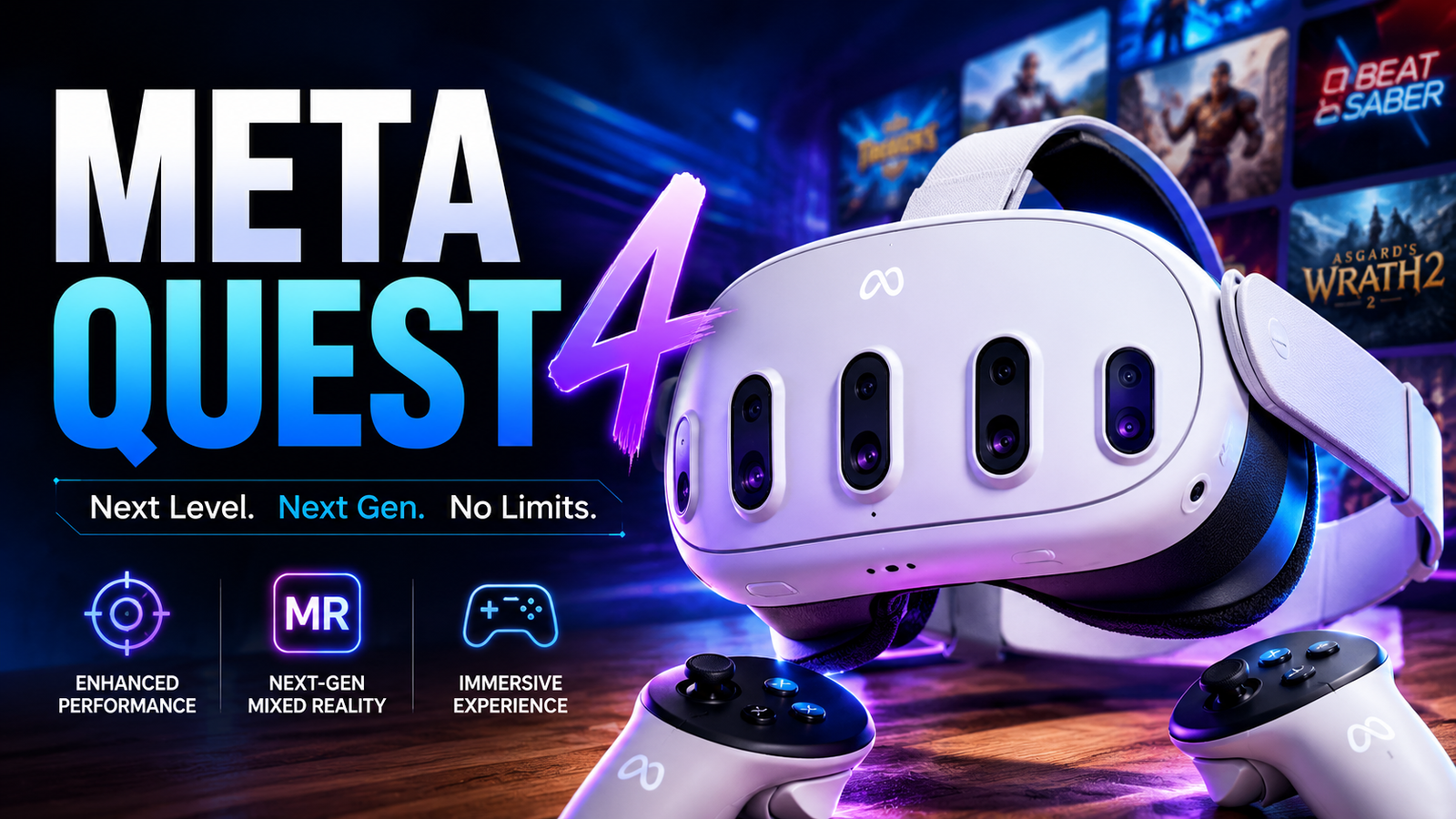
The world of virtual reality has changed dramatically over the past decade, moving from experimental headsets and limited content libraries to powerful standalone devices that are reshaping how people play games, work, and interact with digital environments. Among the most talked-about devices in this evolving space is the Meta Quest 4, a next-generation concept that represents the future direction of consumer VR technology.
Although still not officially detailed in full at the time of writing, the Meta Quest 4 is widely anticipated as the next major step in Meta’s virtual reality ecosystem. It is expected to build on the success of previous devices in the Quest line while pushing further into mixed reality, improved performance, and more seamless integration between physical and digital experiences. For users in the United Kingdom, where VR adoption has been steadily increasing across gaming, education, and enterprise sectors, the arrival of the Meta Quest 4 is likely to mark an important milestone in how immersive technology becomes part of everyday life.
Understanding the Meta Quest 4 involves more than just looking at hardware improvements. It requires an appreciation of how virtual reality itself is evolving, how user expectations are shifting, and how companies like Meta are positioning VR as a mainstream computing platform rather than a niche entertainment tool. This article explores the Meta Quest 4 in depth, examining its expected features, its role in the broader VR ecosystem, and its potential impact on users and industries in the UK.
The Evolution of the Meta Quest Line
To understand the significance of the Meta Quest 4, it is important to reflect on the evolution of the Quest series. The earlier generations of Quest headsets established the foundation for standalone virtual reality, removing the need for external PCs or complex sensor setups. This shift allowed users to experience immersive VR with far greater convenience, making the technology more accessible to everyday consumers.
Over time, improvements in processing power, display resolution, tracking accuracy, and software optimisation have gradually transformed the Quest line into a more complete and capable platform. Each iteration has not only refined performance but also expanded the range of experiences available, from gaming and fitness to social interaction and professional collaboration.
The Meta Quest 4 is expected to continue this trajectory, focusing less on introducing VR as a novelty and more on refining it into a stable, long-term computing environment. Rather than simply being a device for entertainment, it is anticipated to function as a bridge between physical reality and digital productivity, with increased emphasis on mixed reality and spatial computing.
In the UK, this evolution is particularly relevant as both consumers and businesses increasingly explore immersive technologies for remote collaboration, training, and creative production. The Quest ecosystem has already laid the groundwork, and the Meta Quest 4 is expected to push these capabilities further into mainstream use.
Expected Design Philosophy of Meta Quest 4
The design philosophy behind the Meta Quest 4 is expected to centre on three main principles: comfort, realism, and integration. Comfort has always been a critical factor in VR adoption, as early headsets often suffered from being heavy, bulky, or uncomfortable during extended use. Future iterations are likely to prioritise lighter materials and improved weight distribution, making longer sessions more practical for users.
Realism in virtual environments is another key focus area. This does not only refer to visual fidelity but also to how naturally users can interact with digital objects. Improvements in hand tracking, eye tracking, and spatial awareness are expected to contribute to a more intuitive experience where users feel less like they are operating a device and more like they are existing within a digital space.
Integration refers to how seamlessly the headset connects with other devices and services. The Meta Quest 4 is expected to strengthen its connection to broader digital ecosystems, potentially allowing smoother transitions between mobile devices, computers, and VR environments. For UK users who increasingly rely on hybrid working models, this integration could prove especially valuable.
Performance Expectations and Hardware Advancements
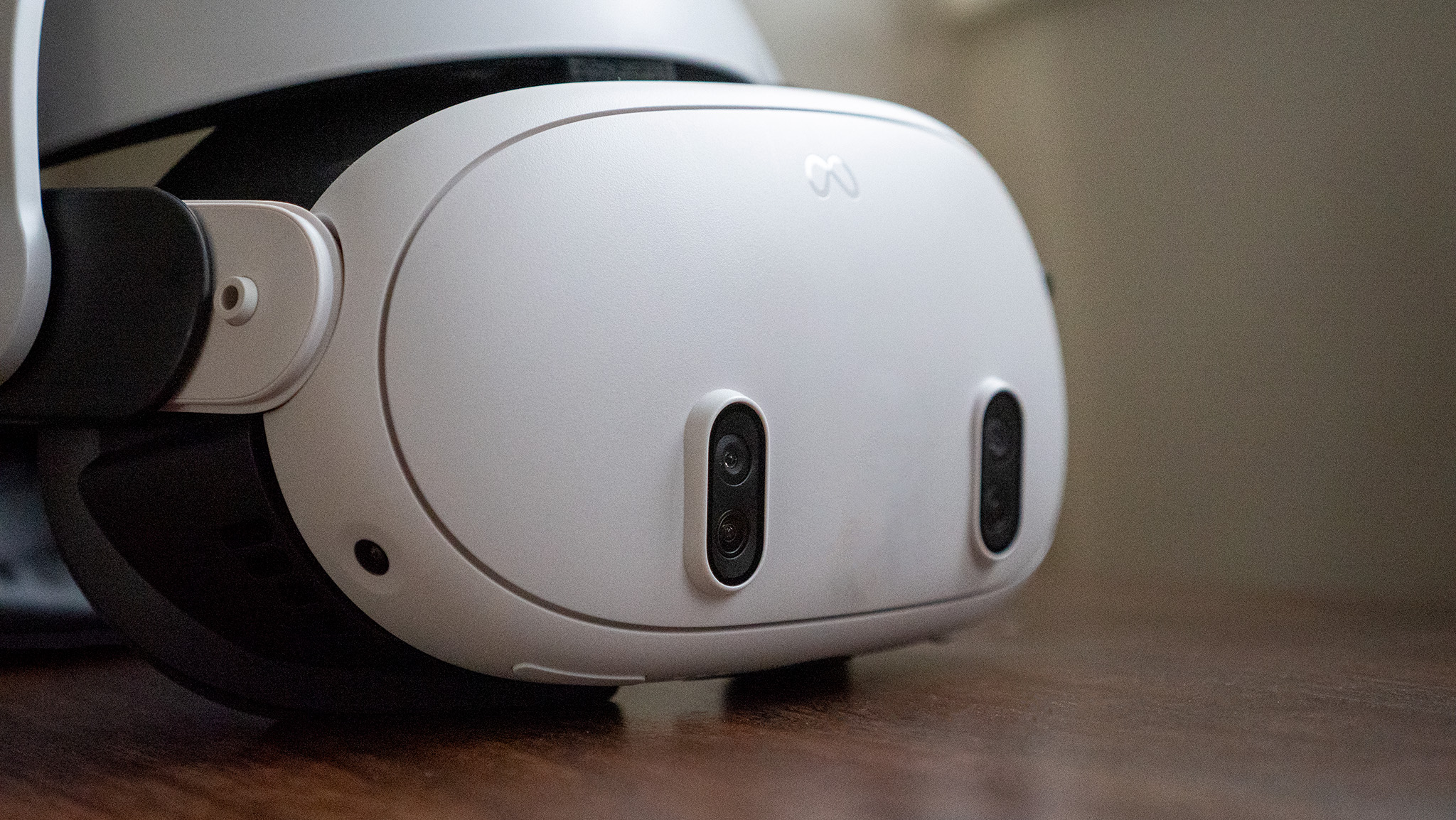
One of the most anticipated aspects of the Meta Quest 4 is its performance upgrade over previous generations. While exact specifications remain unconfirmed, industry expectations suggest a significant leap in processing capability, improved graphical rendering, and enhanced energy efficiency.
A more powerful processor would allow the headset to handle more complex virtual environments with greater stability and realism. This would be particularly important for high-end gaming experiences, where smooth frame rates and detailed graphics are essential for immersion. It would also benefit productivity applications, such as virtual workspaces, where multiple interactive elements need to function simultaneously without lag or interruption.
Display technology is another area likely to see substantial improvement. Higher resolution panels, improved refresh rates, and better colour accuracy would contribute to sharper and more lifelike visuals. This is especially important in mixed reality scenarios where digital elements are overlaid onto the physical world, requiring precise visual alignment.
Battery life is also expected to improve, although this remains one of the most challenging aspects of standalone VR devices. Efficient power management combined with more advanced chipsets could allow users to enjoy longer sessions without frequent interruptions for charging.
Mixed Reality and the Blending of Digital and Physical Worlds
One of the most transformative aspects of the Meta Quest 4 is expected to be its emphasis on mixed reality. Unlike traditional virtual reality, which fully immerses users in a digital environment, mixed reality blends virtual elements with the physical world in real time.
This approach has significant implications for how people interact with technology. Instead of being isolated from their surroundings, users can remain aware of their physical environment while interacting with digital overlays. This could include virtual screens placed within a real room, interactive training simulations, or collaborative workspaces shared across different locations.
In the UK, mixed reality could play a major role in sectors such as education, healthcare, and engineering. Students might use immersive simulations to explore complex scientific concepts, while medical professionals could benefit from realistic training environments that replicate real-world scenarios without risk. Engineers and designers could collaborate on virtual prototypes that exist within shared spatial environments.
The Meta Quest 4 is expected to refine these capabilities further, making mixed reality experiences more stable, responsive, and visually convincing.
The Role of Software and the VR Ecosystem
Hardware alone does not define the success of a VR platform. The software ecosystem plays an equally important role in shaping user experience. The Meta Quest 4 is expected to benefit from a growing library of applications, ranging from entertainment and fitness to productivity and social interaction.
VR gaming is likely to remain a core component, with developers continuing to create more sophisticated and immersive titles that take advantage of improved hardware capabilities. However, beyond gaming, there is increasing interest in virtual offices, collaborative tools, and creative applications that allow users to design, build, and communicate in three-dimensional space.
For UK users, this expanding ecosystem could lead to more practical use cases in everyday life. Remote working environments could become more immersive, reducing reliance on traditional video conferencing tools. Creative professionals could use VR platforms for design, animation, and digital art in ways that feel more natural and interactive.
The success of the Meta Quest 4 will depend heavily on how well this ecosystem continues to grow and how effectively developers are supported in creating high-quality experiences.
Gaming Experience on Meta Quest 4
Gaming remains one of the most influential drivers of VR adoption, and the Meta Quest 4 is expected to significantly enhance this area. Improved hardware performance would allow for more detailed environments, more responsive gameplay, and more complex physics systems.
Immersion is expected to reach new levels, with better motion tracking and reduced latency contributing to a more natural sense of presence within games. This is particularly important in competitive or fast-paced titles where precision and responsiveness are essential.
In the UK gaming market, where VR adoption continues to grow among both casual and dedicated players, the Meta Quest 4 could help bridge the gap between traditional console gaming and fully immersive virtual environments. It may also encourage more developers to invest in VR-specific titles, expanding the range of available experiences.
Productivity and Work Applications
Beyond entertainment, the Meta Quest 4 is expected to play a growing role in productivity and professional environments. Virtual workspaces could allow users to replace or supplement traditional computer setups with immersive digital environments that offer greater flexibility.
This could include multiple virtual monitors, interactive dashboards, and spatial file management systems that allow users to organise work in three-dimensional space. For remote teams in the UK, this could improve collaboration by making digital meetings feel more engaging and interactive.
Industries such as architecture, design, and engineering may also benefit from the ability to visualise projects in a fully immersive environment. This could improve decision-making and reduce errors by allowing teams to explore digital models at full scale.
Social Interaction and Virtual Communities
Social VR is another area where the Meta Quest 4 is expected to make a significant impact. Virtual spaces that allow users to interact with friends, colleagues, and communities in real time are becoming increasingly popular.
These environments go beyond traditional messaging or video calls by offering a sense of shared presence. Users can meet in virtual rooms, attend events, or explore digital worlds together, creating a more engaging form of communication.
In the UK, where digital social interaction has become more common due to remote working trends and online communities, the Meta Quest 4 could further enhance how people connect across distances.
Challenges and Limitations
Despite the excitement surrounding the Meta Quest 4, there are still several challenges that must be addressed. One of the most significant is accessibility, as advanced VR devices can still be expensive for many consumers. While prices have gradually become more competitive, affordability remains an important factor in widespread adoption.
Another challenge is motion comfort and user adaptation. Although VR technology has improved significantly, some users still experience discomfort during extended sessions. Continued improvements in frame rate stability, motion tracking, and ergonomic design will be essential in addressing this issue.
Content availability is also a critical factor. Without a strong and diverse software library, even the most advanced hardware can struggle to maintain long-term user engagement.
The Future of Virtual Reality Beyond Meta Quest 4
Looking beyond the Meta Quest 4, the future of virtual reality is likely to move towards even deeper integration with everyday life. Devices may become lighter, more powerful, and more socially integrated, eventually blending seamlessly with augmented reality systems and wearable technology.
The long-term vision is a world where digital and physical environments coexist naturally, allowing users to switch between realities without friction. The Meta Quest 4 represents an important step in this direction, serving as a bridge between current VR capabilities and future spatial computing platforms.
In the UK, this evolution could transform not only entertainment but also education, work, and communication. As infrastructure improves and digital adoption continues to grow, VR may become a standard part of how people interact with technology.
Conclusion
The Meta Quest 4 represents a significant moment in the ongoing evolution of virtual reality. While many of its specific details remain speculative, the direction it points towards is clear. It is not simply about improving gaming performance or visual quality, but about redefining how people interact with digital environments in everyday life.
For users in the UK, the potential impact of the Meta Quest 4 extends across multiple areas, including entertainment, education, professional work, and social interaction. Its emphasis on mixed reality, improved performance, and deeper ecosystem integration suggests a future where VR becomes more natural, accessible, and useful.
As virtual reality continues to mature, the Meta Quest 4 stands as a symbol of where the technology is heading. It reflects a shift from isolated immersive experiences towards integrated digital ecosystems that blend seamlessly with the real world. Whether for gaming, productivity, or communication, it represents a step closer to a future where digital and physical realities are no longer separate, but part of a unified experience.
You may also read: Do Tenants Have to Pay Council Tax in Rental Properties