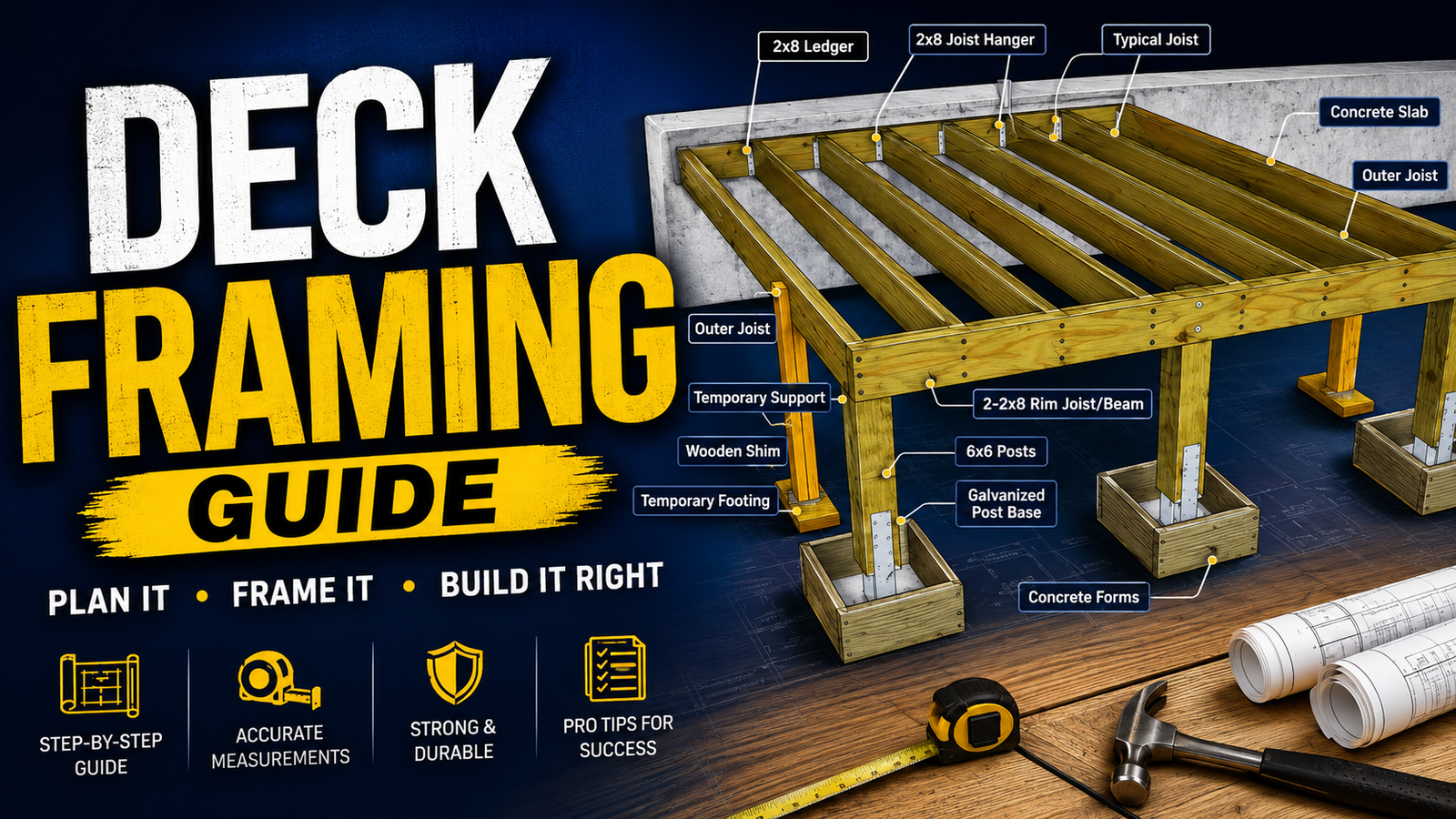
A well-built outdoor deck can transform a garden space into a practical and enjoyable extension of the home. Whether it is used for relaxing, entertaining guests, or creating an outdoor dining area, the strength and durability of the structure depend heavily on what lies beneath the surface. This is where a detailed deck framing guide becomes essential, as the framing forms the backbone of any deck construction.
In the UK, where weather conditions can vary from persistent rainfall to occasional frost and damp ground conditions, understanding how to properly design and build a deck frame is even more important. A poorly constructed frame can lead to instability, sagging surfaces, water damage, and safety risks over time. On the other hand, a carefully planned and correctly executed frame ensures that the deck remains safe, level, and long lasting.
This comprehensive deck framing guide is designed to help homeowners, DIY enthusiasts, and even aspiring builders understand every essential aspect of deck framing. From the basic principles of structure to material selection, from load distribution to long term maintenance considerations, each section builds a complete picture of how a strong deck comes together. The aim is to provide clear, practical knowledge that can be applied to real projects while maintaining a focus on safety, durability, and UK building conditions.
Understanding the Fundamentals of Deck Framing
At its core, deck framing refers to the structural skeleton that supports the visible surface of a deck. This framework is responsible for carrying all loads, including furniture, foot traffic, and environmental pressures such as wind and rain. Without a properly designed frame, even the highest quality decking boards will fail prematurely.
A standard deck frame consists of several interconnected elements that work together to distribute weight evenly. These elements include support posts, beams, joists, and in some cases a ledger board where the deck attaches to a building. Each part plays a specific role in maintaining stability and strength.
When studying any reliable deck framing guide, it becomes clear that the success of the structure depends on balance and precision. Every component must be correctly spaced and securely fixed, ensuring that loads transfer smoothly through the frame into the ground or supporting structure. In the UK context, where soil conditions can vary from clay to sandy compositions, proper load distribution becomes even more critical.
Understanding these fundamentals is the first step towards building a deck that not only looks good but also performs safely over time.
Planning a Deck Structure for UK Conditions
Planning is a crucial stage in any deck framing guide, and it is often where the long-term success of the project is determined. In the UK, planning must take into account environmental factors such as moisture levels, temperature fluctuations, and ground stability.
Before any construction begins, it is important to consider the intended use of the deck. A small seating area will have very different structural requirements compared to a large entertainment space that needs to support heavy furniture and frequent use. This understanding influences everything from the spacing of joists to the depth of foundations.
Another important consideration is the location of the deck within the garden. Areas with poor drainage or uneven ground may require additional preparation to ensure stability. The deck framing guide approach always emphasises the importance of creating a level and well-supported base before any framing work begins.
It is also essential to think about integration with the existing property. If the deck is attached to a house, careful attention must be given to how it connects with the building structure. This connection point must be strong enough to support load transfer without causing damage to the property itself.
Good planning reduces construction issues later and ensures that the finished deck performs reliably throughout its lifespan.
Materials Used in Deck Framing Construction

The choice of materials plays a significant role in the strength and durability of a deck frame. In most UK projects, timber remains the most commonly used material due to its availability, cost effectiveness, and ease of use. However, not all timber is suitable for structural framing.
Pressure treated softwood is often the preferred choice because it is resistant to moisture, decay, and insect damage. This makes it particularly suitable for the damp UK climate. In more premium builds, hardwood or engineered timber may also be used, offering increased durability and aesthetic appeal.
In addition to timber, metal fixings such as galvanised brackets, screws, and joist hangers are essential for securing the frame. These components ensure that joints remain stable and resistant to movement over time. Corrosion resistance is particularly important in outdoor environments where exposure to moisture is constant.
Concrete is also a key material in deck framing guide principles, especially when forming foundations. It provides a stable base for support posts and helps distribute structural loads into the ground.
The combination of these materials must be carefully selected to ensure compatibility and long-term performance.
Foundations and Ground Support Systems
A strong deck begins with a solid foundation. In the UK, where ground conditions can be unpredictable, foundations play a particularly important role in ensuring structural stability. The primary purpose of foundations is to transfer the weight of the deck safely into the ground without movement or sinking.
There are several approaches to creating foundations, depending on the size and type of deck. Concrete footings are commonly used for larger structures, as they provide strong and stable support points for vertical posts. These footings are typically set below ground level to avoid movement caused by frost or soil shifting.
For smaller decks, adjustable pedestals or surface-mounted supports may be used, although these still require a stable and well-prepared base.
A key principle in any deck framing guide is ensuring that all support points are level and properly aligned. Even small inconsistencies at foundation level can lead to structural problems higher up in the frame. This includes uneven decking surfaces, increased stress on joints, and long-term instability.
Proper foundation design ensures that the entire deck remains secure and capable of handling both static and dynamic loads.
Joists and Beams in Structural Deck Framing
Joists and beams form the main structural grid of a deck frame. Beams act as primary support elements, transferring weight to posts and foundations, while joists span between beams to create the surface support structure for decking boards.
The spacing and size of joists are critical factors in ensuring structural integrity. In general, closer spacing provides greater strength and reduces the likelihood of flexing under load. However, spacing must also take into account material efficiency and design requirements.
In the UK, where decks are often exposed to wet conditions, proper spacing also helps with drainage and ventilation. This reduces the risk of moisture build-up, which can weaken timber over time.
Beams must be carefully positioned to distribute loads evenly across the structure. Any misalignment can result in uneven weight distribution, which may compromise the entire frame. The deck framing guide approach always emphasises accuracy during this stage, as it forms the structural backbone of the deck.
Secure connections between joists and beams are achieved using metal fixings, which help maintain stability even under changing weather conditions.
The Role of Ledger Boards in Attached Decks
When a deck is attached directly to a house, the ledger board becomes one of the most important structural components. It acts as the connection point between the deck frame and the building itself, transferring loads safely into the main structure.
Correct installation of the ledger board is essential to prevent water ingress and structural damage to the property. It must be securely fixed into the building’s load-bearing structure rather than just external cladding. Waterproofing measures are also necessary to prevent moisture from penetrating the wall.
In many deck framing guide principles, special attention is given to ensuring that the ledger board is level and properly aligned. Any deviation at this stage will affect the entire structure of the deck.
Because this component plays such a critical role, it is often one of the most carefully inspected parts of any deck construction.
Free-Standing Deck Framing Structures
Not all decks are attached to buildings. Free-standing decks are supported entirely by their own framework and foundations, making them highly versatile in garden design. These structures rely on a network of posts, beams, and joists to maintain stability.
One of the main advantages of free-standing decks is flexibility in placement. They can be installed in areas where attachment to a building is not possible or desirable. However, this also means that the structural design must be self-sufficient and highly stable.
In a deck framing guide context, free-standing structures require careful attention to post placement and load distribution. Each support point must be designed to handle both vertical and lateral forces, especially in windy conditions common in the UK.
Proper bracing is often incorporated to increase rigidity and prevent movement. This ensures that the structure remains stable even under varying environmental pressures.
Load Distribution and Structural Integrity
Understanding how loads move through a deck structure is essential for safe construction. Every deck must be designed to handle both static loads, such as furniture, and dynamic loads, such as people moving across the surface.
Load distribution begins at the decking boards and transfers through joists, beams, posts, and finally into the foundations. If any part of this system is weak or incorrectly installed, the entire structure can be compromised.
A well-designed deck framing guide always emphasises the importance of even load distribution. This ensures that no single point of the structure is subjected to excessive stress.
In the UK, where weather conditions can add additional weight through rain accumulation or even occasional snow, load calculations must account for environmental factors as well.
Maintaining structural integrity over time also requires periodic inspection to identify any signs of movement, wear, or moisture damage.
Weather Considerations for UK Deck Framing
The UK climate presents unique challenges for outdoor construction. Frequent rainfall, humidity, and seasonal temperature changes can all affect the performance of a deck frame over time.
Moisture is one of the most significant concerns, as it can lead to timber expansion, contraction, and eventual decay if not properly managed. This is why pressure treated timber and protective coatings are widely recommended in any deck framing guide.
Ventilation is another important factor. Allowing air to circulate beneath the deck helps reduce moisture build-up and prolongs the life of the structure.
Temperature changes can also cause movement in materials, which is why flexible yet secure fixings are essential. These allow the structure to adjust slightly without compromising stability.
Designing with weather resilience in mind ensures that the deck remains functional and safe throughout the year.
Common Mistakes in Deck Framing Construction
Many issues in deck construction arise from avoidable mistakes during the framing stage. One of the most common problems is inadequate foundation support, which can lead to sinking or uneven surfaces over time.
Another frequent issue is incorrect spacing between joists, which can cause excessive flexing in the decking surface. Poor quality fixings or incorrect installation methods can also weaken the overall structure.
Ignoring drainage considerations is another mistake that can significantly reduce the lifespan of a deck. Water accumulation can lead to timber decay and structural instability if not properly managed.
A reliable deck framing guide always highlights the importance of careful planning, accurate measurement, and the use of appropriate materials to avoid these problems.
Conceptual Walkthrough of the Framing Process
Understanding the sequence of construction helps bring all the principles of deck framing together. The process begins with site preparation, where the ground is cleared, levelled, and assessed for stability.
Once the site is prepared, foundation points are established to support the structural posts. These are carefully positioned and set to ensure perfect alignment and level accuracy.
After the foundations are in place, the main support posts are installed and secured. Beams are then fixed across these posts to create the primary structural framework.
Joists are added next, spanning between beams to form the support grid for the decking surface. Each joist must be carefully aligned to ensure uniform spacing and strength distribution.
Finally, the structure is inspected for stability before decking boards are installed on top. This step-by-step progression ensures that each stage supports the next, creating a strong and reliable final structure.
Maintenance and Long-Term Durability
Even a well-built deck requires ongoing maintenance to ensure long-term performance. Regular inspection of the frame helps identify early signs of wear, moisture damage, or movement.
Timber protection treatments may need to be reapplied periodically to maintain resistance against weather exposure. Fixings should also be checked to ensure they remain secure and free from corrosion.
Keeping the area beneath the deck clear of debris helps improve ventilation and reduces moisture retention. This contributes significantly to the overall lifespan of the structure.
A well-maintained deck framing system can last for many years, providing a safe and enjoyable outdoor space throughout its lifetime.
Conclusion
A comprehensive deck framing guide reveals that successful deck construction is built on careful planning, strong foundations, quality materials, and precise execution. Each component of the frame plays a vital role in ensuring the stability and durability of the finished structure.
In the UK, where environmental conditions can be challenging, attention to detail becomes even more important. From understanding load distribution to selecting appropriate materials and designing for weather resistance, every decision contributes to the overall performance of the deck.
By applying the principles outlined in this guide, it becomes possible to create a deck that is not only visually appealing but also structurally sound and long lasting. A well-designed frame is the foundation of every successful deck, and mastering it ensures that outdoor spaces remain safe, functional, and enjoyable for many years to come.
You may also read: The Different Types of Etruesports Codes