In today’s digital economy, businesses generate and process enormous amounts of information every day. From customer interactions and sales transactions to operational metrics and financial reporting, data has become one of the most valuable assets an organisation can possess. However, collecting data is only the first step. The real challenge lies in turning raw information into meaningful insights that support better decision-making and long-term growth.
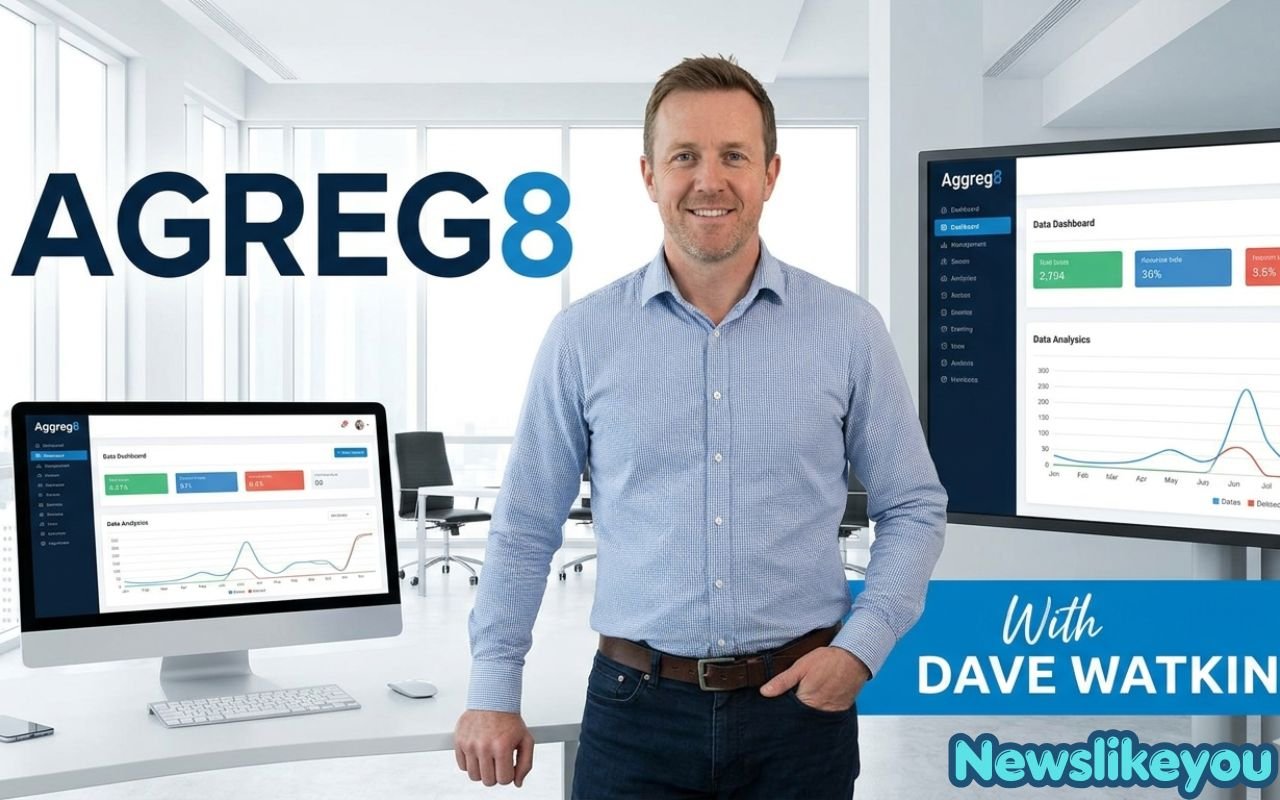
This is where the growing interest in Aggreg8 Dave Watkin comes into focus. As organisations across the United Kingdom continue to modernise their operations and embrace digital transformation, solutions that simplify data integration and analytics are becoming increasingly important. Aggreg8, associated with Dave Watkin, has gained attention for its role in helping businesses bring together complex data sources, improve visibility, and unlock actionable intelligence.
The concept behind Aggreg8 Dave Watkin is rooted in solving one of the biggest challenges facing modern organisations: fragmented information. Many businesses struggle with disconnected systems, inconsistent reporting, and limited access to real-time insights. By addressing these issues, Aggreg8 represents a practical approach to creating a more unified and data-driven business environment.
This article explores the significance of Aggreg8 Dave Watkin, its impact on modern business operations, the benefits of data aggregation, key features, practical applications, industry relevance, and the future potential of intelligent data management solutions. Whether you are a business leader, technology professional, or simply interested in digital innovation, understanding this topic can provide valuable insights into the evolving world of business intelligence.
Understanding Aggreg8 Dave Watkin
The term Aggreg8 Dave Watkin is commonly associated with innovative approaches to data aggregation, business intelligence, and operational efficiency. At its core, Aggreg8 focuses on bringing together information from multiple sources into a single, accessible environment.
Businesses often rely on numerous software systems to manage different functions. Customer relationship management platforms, accounting software, inventory systems, marketing tools, and project management applications all generate valuable data. Unfortunately, these systems frequently operate independently, creating information silos that make it difficult to gain a complete view of business performance.
Aggreg8 addresses this challenge by creating a framework where data from various sources can be consolidated, analysed, and presented in a meaningful way. This enables organisations to make informed decisions based on comprehensive and accurate information rather than relying on fragmented reports.
Dave Watkin’s association with Aggreg8 highlights the importance of leadership and innovation in developing solutions that meet the evolving needs of modern businesses. As organisations seek greater efficiency and competitiveness, technologies that simplify data management continue to attract significant attention.
Why Data Aggregation Matters in Modern Business
Data aggregation has become a critical component of successful business strategy. The ability to combine information from multiple sources provides organisations with a more complete understanding of their operations, customers, and market conditions.
Without effective aggregation, businesses often face challenges such as duplicated information, inconsistent reporting, delayed decision-making, and reduced operational efficiency. Teams may spend considerable time manually gathering and reconciling data instead of focusing on strategic initiatives.
When data is aggregated effectively, organisations gain access to a single source of truth. This improves accuracy, enhances collaboration, and allows decision-makers to respond more quickly to changing circumstances.
The relevance of Aggreg8 Dave Watkin lies in addressing these challenges through intelligent integration and streamlined reporting processes. Businesses that embrace data aggregation are often better positioned to identify opportunities, reduce risks, and improve overall performance.
The Evolution of Business Intelligence
Business intelligence has undergone significant transformation over the past two decades. Traditional reporting systems were often limited in scope and required extensive manual intervention. Reports could take days or even weeks to produce, reducing their value in fast-moving business environments.
Modern business intelligence platforms focus on real-time insights, automation, and accessibility. Users expect dashboards that provide instant visibility into key performance indicators, operational metrics, and financial results.
The emergence of solutions associated with Aggreg8 Dave Watkin reflects this broader evolution. Rather than treating data as a static resource, modern platforms enable organisations to interact with information dynamically and make evidence-based decisions with greater confidence.
As technology continues to advance, business intelligence is becoming more accessible to organisations of all sizes. Small and medium-sized enterprises now have access to tools that were once available only to large corporations, creating new opportunities for growth and innovation.
Key Features Associated with Aggreg8
One of the reasons Aggreg8 has attracted attention is its focus on delivering practical solutions to complex business challenges. Several key features contribute to its value proposition.
Data integration is a fundamental capability. Businesses often use multiple applications and databases that contain important information. Aggreg8 aims to connect these systems and create a unified data environment.
Real-time reporting is another important feature. Access to current information enables organisations to monitor performance, identify trends, and respond to issues before they become significant problems.
Automation plays a crucial role in improving efficiency. By reducing manual data handling and repetitive reporting tasks, organisations can save time and minimise the risk of human error.
Customisable dashboards provide users with relevant insights tailored to their specific roles and responsibilities. Executives, managers, and operational teams can access information that supports their unique decision-making requirements.
Scalability ensures that the platform can adapt to changing business needs. As organisations grow and generate more data, scalable solutions become increasingly important.
Security and governance also remain essential considerations. Effective data management requires robust controls to protect sensitive information and maintain compliance with regulatory requirements.
The Role of Dave Watkin in Business Innovation
Leadership often plays a critical role in the success of technology initiatives. The association between Dave Watkin and Aggreg8 highlights the importance of vision, innovation, and practical problem-solving within the business technology sector.
Successful innovators understand that technology should serve business objectives rather than create additional complexity. Solutions must be designed with end users in mind, ensuring that they are both powerful and accessible.
By focusing on the challenges organisations face when managing data, Dave Watkin has become associated with efforts to simplify information management and improve decision-making capabilities.
This emphasis on usability and business value reflects broader trends within the technology industry, where customer-centric design and measurable outcomes have become increasingly important.
Benefits of Aggreg8 for UK Businesses
Organisations across the United Kingdom face growing pressure to improve efficiency, enhance customer experiences, and remain competitive in rapidly changing markets. Data-driven decision-making has become a key differentiator.
Aggreg8 offers several potential benefits that align with these objectives.
Improved visibility enables businesses to gain a clearer understanding of performance across departments and functions. This supports more effective planning and resource allocation.
Enhanced efficiency reduces the time required to collect, process, and analyse information. Employees can focus on higher-value activities rather than administrative tasks.
Better decision-making results from access to accurate and timely insights. Leaders can identify opportunities and challenges more quickly, enabling proactive management.
Increased collaboration occurs when teams work from a shared set of information. This reduces misunderstandings and supports more coordinated action.
Greater scalability helps organisations adapt to growth without experiencing significant disruptions to their reporting and analytics capabilities.
Competitive advantage emerges when businesses use data effectively to improve customer experiences, optimise operations, and identify new market opportunities.
How Data Integration Supports Digital Transformation
Digital transformation has become a strategic priority for many organisations. However, transformation efforts often encounter obstacles related to data quality, accessibility, and integration.
Data integration serves as a foundation for successful digital transformation initiatives. Without connected information systems, organisations may struggle to realise the full value of their technology investments.
Aggreg8 Dave Watkin represents the growing recognition that integrated data environments are essential for modern business success. By bringing together information from multiple sources, organisations can create a more cohesive digital ecosystem.
This enables advanced analytics, automation, artificial intelligence applications, and improved customer experiences. As digital transformation continues to accelerate, the importance of effective data integration is likely to increase further.
Common Challenges Solved by Aggreg8
Many organisations encounter similar obstacles when attempting to manage and utilise their data effectively.
Information silos represent one of the most common challenges. Different departments may maintain separate systems that do not communicate effectively with one another.
Inconsistent reporting can create confusion and undermine confidence in decision-making processes. Different teams may produce conflicting results based on varying data sources and methodologies.
Manual processes consume valuable time and increase the likelihood of errors. Employees often spend hours compiling reports instead of analysing insights.
Limited visibility can make it difficult to identify emerging trends or operational issues. Delayed access to information may result in missed opportunities.
Aggreg8 addresses these challenges by providing mechanisms for data consolidation, automation, and improved reporting. This creates a more efficient and transparent information environment.
Industry Applications of Aggreg8
The principles associated with Aggreg8 Dave Watkin can be applied across a wide range of industries.
In retail, aggregated data supports inventory management, customer analysis, and sales forecasting. Businesses can gain deeper insights into purchasing behaviour and market trends.
Financial services organisations rely on integrated data to manage risk, ensure compliance, and improve customer experiences. Accurate information is essential for effective decision-making in highly regulated environments.
Healthcare providers benefit from consolidated information that supports patient care, operational efficiency, and resource management.
Manufacturing companies use data aggregation to monitor production performance, optimise supply chains, and reduce operational costs.
Professional services firms leverage business intelligence to track project performance, manage client relationships, and improve profitability.
Public sector organisations also benefit from improved data visibility, enabling more effective service delivery and resource allocation.
The Growing Importance of Real-Time Analytics
Modern business environments operate at unprecedented speed. Market conditions, customer expectations, and competitive dynamics can change rapidly.
As a result, real-time analytics has become increasingly valuable. Organisations can no longer rely solely on historical reports that provide a retrospective view of performance.
Real-time analytics enables businesses to monitor operations continuously and respond to developments as they occur. This supports more agile decision-making and improves organisational responsiveness.
Aggreg8 contributes to this capability by facilitating the integration and presentation of current information from multiple sources. Decision-makers gain access to timely insights that support informed action.
The growing demand for real-time intelligence reflects broader changes in how organisations compete and operate in the digital age.
Data Quality and Governance Considerations
While data aggregation offers significant benefits, it also highlights the importance of data quality and governance.
Poor-quality data can undermine analytics initiatives and lead to inaccurate conclusions. Organisations must ensure that information is accurate, consistent, and reliable.
Governance frameworks establish standards for data management, ownership, and security. These frameworks help maintain trust in organisational data assets.
Solutions such as Aggreg8 support governance efforts by creating more structured and transparent data environments. When information is consolidated and managed effectively, organisations can improve accuracy and accountability.
As regulatory requirements continue to evolve, robust governance practices will remain a critical component of successful data strategies.
Future Trends in Data Aggregation
The future of data aggregation is closely linked to advancements in artificial intelligence, machine learning, cloud computing, and automation.
Artificial intelligence is expected to play an increasingly important role in identifying patterns, generating insights, and supporting decision-making processes. Aggregated data provides the foundation required for effective AI applications.
Cloud-based technologies continue to improve accessibility, scalability, and cost efficiency. Organisations can access advanced capabilities without significant infrastructure investments.
Automation will further reduce manual effort and enable faster access to actionable information. Routine reporting and data preparation tasks are likely to become increasingly automated.
Predictive analytics will allow businesses to anticipate future trends rather than simply react to past events. This shift towards forward-looking intelligence represents a significant opportunity for organisations seeking competitive advantage.
The continued evolution of platforms associated with Aggreg8 Dave Watkin is likely to reflect these broader technological trends.
Building a Data-Driven Culture
Technology alone is not sufficient to achieve successful business outcomes. Organisations must also foster a culture that values data-driven decision-making.
A data-driven culture encourages employees to use evidence rather than assumptions when making decisions. This requires access to reliable information, appropriate training, and strong leadership support.
Aggreg8 contributes to this objective by making information more accessible and understandable. When employees can easily access relevant insights, they are more likely to incorporate data into their daily activities.
Building a data-driven culture requires ongoing commitment and investment. However, organisations that embrace this approach often achieve better performance, greater innovation, and stronger competitive positioning.
Why UK Organisations Are Investing in Business Intelligence
Across the United Kingdom, businesses are increasingly investing in business intelligence and data management capabilities. Several factors are driving this trend.
Economic uncertainty has increased the need for accurate forecasting and informed decision-making. Organisations require reliable insights to navigate complex market conditions.
Customer expectations continue to evolve, creating demand for more personalised and responsive experiences. Data-driven insights help organisations understand and meet these expectations.
Competitive pressures encourage businesses to identify efficiencies and opportunities for differentiation. Advanced analytics supports these objectives by revealing patterns and trends that may otherwise remain hidden.
Regulatory requirements also necessitate improved reporting and governance capabilities. Effective data management helps organisations maintain compliance while improving operational performance.
The growing interest in Aggreg8 Dave Watkin reflects these broader market dynamics and the increasing importance of intelligent information management.
Conclusion
Aggreg8 Dave Watkin represents a significant topic within the evolving landscape of data integration, business intelligence, and digital transformation. As organisations continue to generate larger volumes of information, the ability to consolidate, analyse, and act upon data has become a critical success factor.
The principles associated with Aggreg8 focus on solving common business challenges related to fragmented information, inefficient reporting, and limited visibility. By enabling data integration, real-time analytics, automation, and improved decision-making, such solutions help organisations unlock greater value from their information assets.
For UK businesses seeking to enhance efficiency, improve customer experiences, and maintain competitiveness, effective data management is no longer optional. It has become an essential component of modern business strategy.
As technology continues to evolve, the importance of intelligent data aggregation is likely to grow even further. Organisations that embrace these capabilities will be better positioned to navigate complexity, identify opportunities, and achieve sustainable success in an increasingly data-driven world.
Understanding Aggreg8 Dave Watkin provides valuable insight into how modern businesses can transform raw information into meaningful intelligence. By leveraging integrated data environments and fostering a culture of informed decision-making, organisations can create stronger foundations for innovation, growth, and long-term performance.
You may also read: The Relationship Between Nutrition and Supplementation